
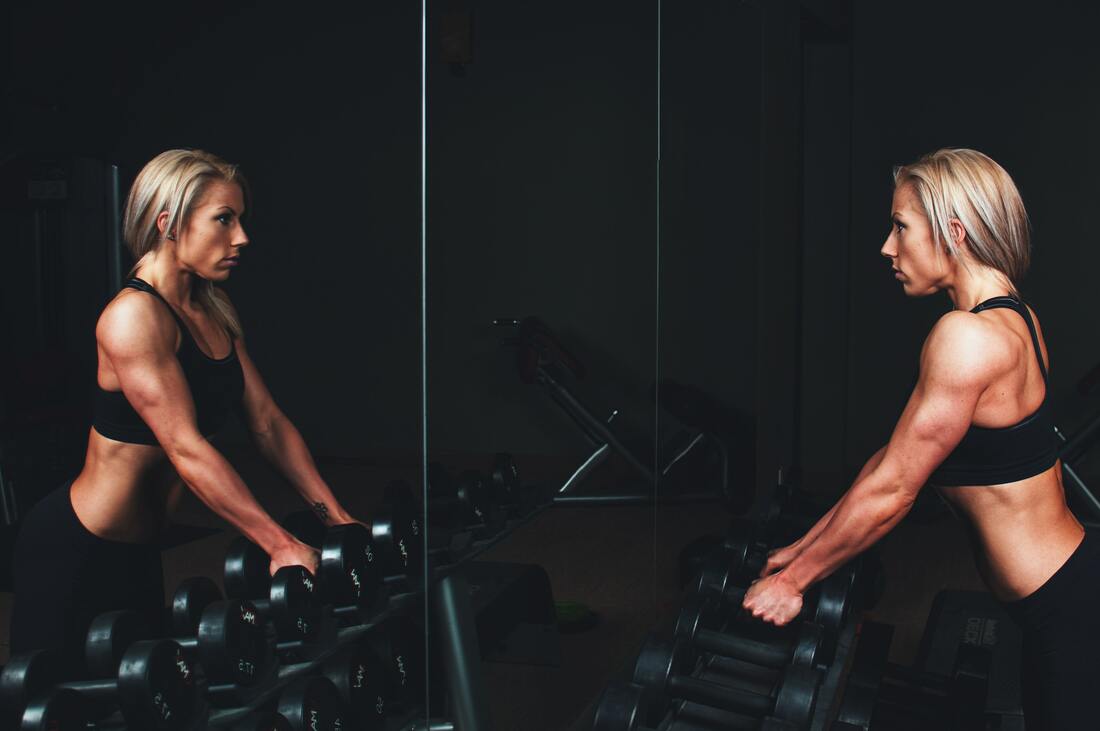
 Free stock photo from Pexels.com. One important key to success is self-confidence. An important key to self-confidence is preparation. In the UK, research shows that 75% of females are keen on a more active lifestyle, but feel intimidated by the gym environment and limited by work and family commitments. For that reason, in 2015 Sport England launched a campaign called This Girl Can to empower females to exercise.
In 2017, a similar survey on 1,000 people in America suggested that almost 65% of females, compared to 36% of males, are too anxious or self-conscious to go to the gym. Most of the studies done on the transgender population in relation to fitness have focused on sport. Nevertheless, there is evidence that recreational exercisers experience discrimination and other negative experiences, too. That, along with the amount of articles on how to overcome dysphoria at the gym, proves how hard it can be for female-bodied individuals of any gender to engage in a more active lifestyle. So it’s important to find ways to increase our self-esteem and motivation. And what better way than knowledge? With resistance training, in particular, we have the potential to accomplish great things. Unfortunately, we often underestimate that potential. When confronted with some buff gym bro, we think, “Why should I bother?” For cis girls, the question stops there. For trans guys, it could become, “Why should I bother until I’m on testosterone?” This lack of belief in ourselves can be a hard or impossible obstacle to overcome. But what can this body do for us? What can we do for ourselves? A lot, it turns out. In this article, I’m going to give you three reasons why you should feel more confident in the gym.
0 Comments
 Free stock photo from Pexels.com. Courage doesn’t always roar. Sometimes courage is the quiet voice at the end of the day saying, ‘I will try again tomorrow.’ Useful Links: Part 1
Myth #2 – Training legs and glutes will make them look more feminine Short answer: I think you already know where I’m going with this. 
Free stock photo from Pexels.com.
Some are born strong and others are made strong.
Useful Links: Part 2
If you’re pre-T and reading this article, chances are you want to build some muscle. That’s awesome! In my experience, the internet offers a lot of contradictory advice on training for anyone on the gender spectrum. That’s not awesome. Two of the questions I get most frequently from other trans guys relate to:
I’m going to cover a myth and a truth about both in two articles. It’s myth-busting time!  Free stock photo from Pexels.com. Ego trip: a journey to nowhere. Squat, bench, and deadlift are staple exercises for lifters of all ages. They are the three main lifts performed in powerlifting competitions, so they are a “must do” for athletes. They are also compound movements that work out different muscle groups at the same time, which is ideal for anyone who wants to build strength, sculpt their physique, and improve their body’s efficiency performing everyday tasks. Lastly, they’re the best exercises to show off and ego lift.
Good old ego lifting. I’ve been there often, trying to push a weight that was way out of my league because my workout log said so. But what does actually happen when you lift too much? Having had a bad case of ego lifting at least once on each of the three lifts mentioned above, I noticed different consequences. And no, it wasn’t only injury. There are also less obvious outcomes, ranging from hampering your gains to developing bad form habits. |
Nikias TomasielloWelcome to my blog. I’m an online fitness coach with a passion for bodybuilding, fantasy, and bread. Want to work with me? Check out my services!Archives
May 2026
Tags
All
|
 RSS Feed
Follow me on social media |
Get in touch |
© 2018–Present Nikias Tomasiello – All rights reserved